

When NSBANS issues bans and policy statements they will be posted here:
Latest Bans & Polices
• • •
- Not Transforming Disability Supports
 The Government of Nova Scotia’s recent announcement clarifies that its $1 million Service Evolution Fund is more about enhancing press releases than actual support for the majority of people with disabilities. While it emphasizes transformation, concrete benefits for individuals remain non-existent, focusing instead on consultancy and branding efforts.
 - New Housing Critic
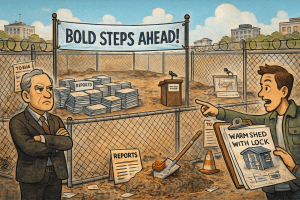 The Nova Scotia Legislature has appointed a new Housing Critic to address ongoing housing issues through criticism rather than action. The government emphasizes its commitment while presenting no measurable outcomes. Citizens express frustration, suggesting the need for concrete steps rather than bureaucratic reports. The situation remains unresolved, with critics outnumbering solutions.
 - Exceeding Healthcare Enrolment
 Nova Scotia’s Department of Educational Workforce Expansion and Compliance reports exceeding healthcare enrolment targets due to a new Standards Optimization Framework. This framework adjusts admission criteria to improve access without lowering quality. Despite strong enrolment, retention challenges are anticipated due to high workplace demands and psychological stress on graduates.
 - New Nursing Designation
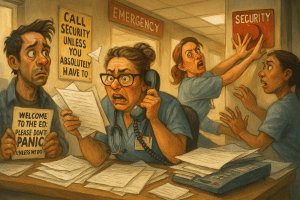 The Nova Scotia Bureau for Accidental Mental Health Outcomes introduced a new nursing designation to enhance mental health competency among nurses in emergency and psychiatric settings. This reform aims to reduce misunderstandings and crises, ensuring that staff can appropriately address mental health needs, recognize symptoms, and de-escalate situations effectively.
 - Premier’s Bourbon Speech
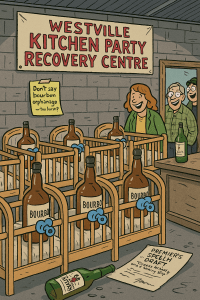 In a speech addressing a kitchen party in Westville, Premier H highlighted Nova Scotia’s $1.2 billion budget deficit and its peculiar $14 million bourbon stockpile. He proposed releasing the bourbon to stop financial losses, selling storage warehouses, and banning excessive liquor hoarding, emphasizing the need for practical solutions amidst the crisis.
 - Government Reaffirms Commitment
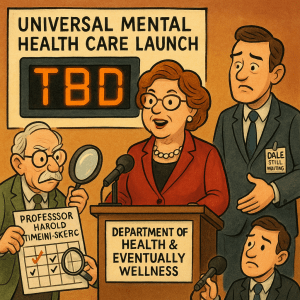 The Government of Nova Scotia’s Department of Health and Eventually Wellness reiterated its commitment to universal mental health care, still in an undefined planning phase since 2021. Despite announcing advisory reviews and working groups, operational services remain nonexistent. Officials emphasized cautious progression, with public updates to follow pending further evaluations.
 - SPECIAL PRESS RELEASE
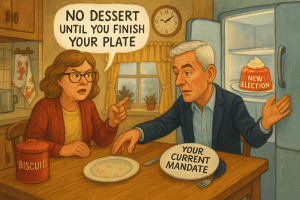 Marlene MacKinnon, the Nova Scotia Mom-in-Residence, criticizes Premier Tim Houston’s interest in a new election before utilizing his current mandate. She likens his behavior to typical Maritime tendencies of abandoning projects for new ones, emphasizing the need for fiscal responsibility and urging him to focus on existing commitments before seeking new political ventures.
 - Halifax Unveils Bold Plan to Become Canada’s First Post-Functioning City
 Halifax’s Department of Perpetual Pilot Projects announced a controversial plan to transform the city into Canada’s first post-functioning municipality. The strategy includes policies that hinder mobility through construction and infrastructure changes while promoting a vision of stagnation. Despite questionable data and public input, officials remain optimistic about the plan’s success.
 - Premier Houston’s “Energy Symposium” Trip Confirmed as Secret Statehood Negotiation
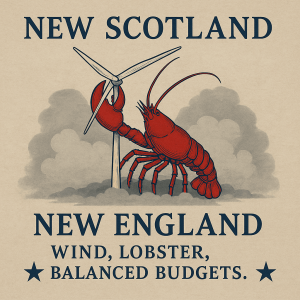 Nova Scotia is secretly negotiating to join the U.S. amid a severe fiscal crisis, with Premier Houston’s trip to Boston framed as an energy conference. Proposed terms include cultural adjustments and infrastructure improvements, while the U.S. shows more receptiveness than in previous centuries. The situation highlights the province’s urgent need for financial stability.
 - Nova Scotia Warns: With a $1.2B Deficit and Alberta About to Leave With $5B More, the Province Is Officially Broke and Needs Critical Structural Change
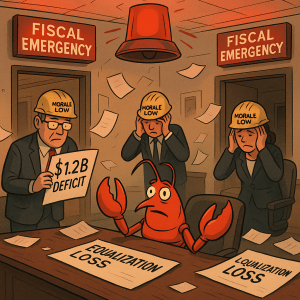 Nova Scotia faces a dire financial crisis with a $1.2 billion deficit and potential losses of $5 billion if Alberta exits. The Department of Fiscal Shock calls for urgent structural reforms, prioritizing essential infrastructure and finding new economic partners. Nova Scotia’s fiscal future hinges on immediate changes and securing stability.
 - DRAFS Statement on the Auditor General’s Findings
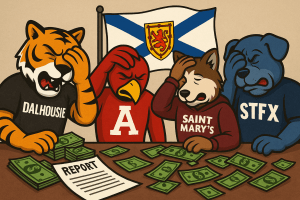 The Department of Retroactive Accountability & Fiscal Shock (DRAFS) has publicly acknowledged the Auditor General’s findings regarding $2.5 billion in university funding over five years, admitting a lack of oversight. DRAFS plans to improve accountability by asking for data, updating outdated funding formulas, and implementing basic oversight measures moving forward.
 - Province Issues Annual Reminder That Winter Exists — Again.
 The Nova Scotia Department of Seasonal Reality Checks has issued its annual winter reminder, highlighting the return of winter conditions. With humor, officials encourage motorists to prepare by using winter tires, clearing their vehicles, and driving cautiously. Budget constraints limit road safety measures, and winter driving safety remains a priority.
 - Public Servants to Begin “Continuing Education,” a Concept Previously Known Only to Actual Professionals
 The Province of Nova Scotia is launching “Operation Catch Up,” mandating continuing education for public servants starting January 1, 2026. This new initiative aims to address long-standing competency gaps by requiring annual training and mandatory Lunch & Learn sessions. The EduTrak NS system will track progress and ensure accountability among government employees.
 - Manditory Family Oversight
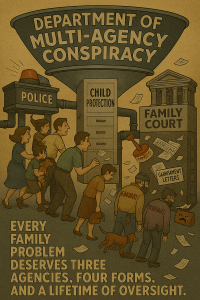 The Province of Nova Scotia has introduced the Family Oversight and Compliance Strategy (FOCS) to mandate agency involvement in all family disputes, prohibiting independent resolutions. This initiative aims to ensure proper oversight by police, child protection services, and family courts. Violations will incur fines and reinforce agency control, impacting family dynamics significantly.
 - NS World Homeless Day
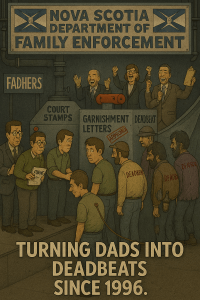 On World Homeless Day, Nova Scotia highlights its controversial policies contributing to homelessness, emphasizing low social assistance rates and harsh income enforcement. The province’s tactics, framed as accountability, turn struggling fathers into financial failures, while promoting a narrative that discourages reform. Critics argue this approach prioritizes bureaucracy over compassion.
 - Mega Fiddle
 Nova Scotia plans to build a 400-foot Mega-Fiddle visible from Kelly’s Mountain, projected to draw tourism despite its $82 million cost. Critics question prioritizing this over essential services. The project aims to be a landmark and cultural attraction, but concerns include potential distractions for drivers and local fishing impacts.
 - No Bump Order
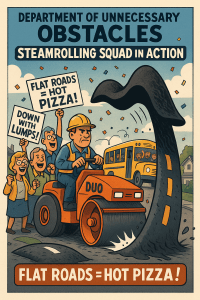 The Department of Unnecessary Obstacles has issued an order prohibiting the installation of speed bumps and similar asphalt deformities in Nova Scotia. This decision addresses issues such as environmental concerns, increased vehicle damage, and public dissatisfaction, aiming to restore smooth road conditions while encouraging citizen participation in enforcement.
 - Medical Privacy Banned
 Nova Scotia’s government has amended the Personal Health Information Act, allowing unrestricted access to residents’ medical records by the Health Minister without consent. This move is part of a larger initiative that disregards privacy for purported health management. Citizens face penalties for non-compliance, while their health data becomes a public matter, sparking outcry and potential legal challenges.
 - Antisemitic Graffiti
 Antisemitism is no longer whispered in Nova Scotia. It’s spray-painted across synagogue doors, shouted in rented arenas, and defended in university classrooms.
 - Democracy Ends at School
 The Parental Containment Strategy 2025 in Nova Scotia eliminates elected school boards, ensuring parental exclusion from educational decisions. The government aims to maintain bureaucratic control, with penalties for parental involvement including fines and mandatory seminars. Critics argue this undermines transparency and local accountability in education, fostering a climate of silence and legal threats.
 - South End Wells
 The Nova Scotia government opposes the South End Water Choice Coalition’s demand for private well drilling, citing the 1923 Timmy’s Down the Well Act to protect citizens from unregulated water sources. Minister Splashbottom argues that regulation maintains water affordability despite rising costs. A new Bureau will address concerns while promoting government control over water supply.
 - Violence Epidemic Cure
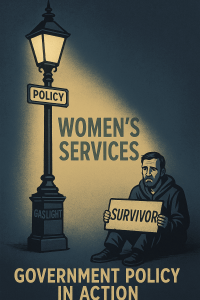 Nova Scotia declared intimate partner violence an epidemic one year ago, yet it has provided no services for male survivors, despite a $23 million budget for women’s services. Critics accuse the government of perpetuating abuse through funding denial and neglect. Minister Polly C. Paralysis emphasized the need for balance over actual help.
 - Roundabout Driving Restrictions
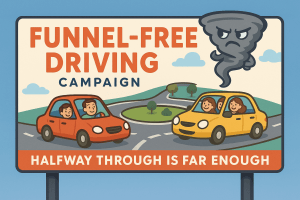 The Province of Nova Scotia has implemented immediate restrictions on roundabout driving, limiting motorists to half-turns to mitigate tornado risk. Traffic engineers warn that excessive circular driving fuels dangerous rotational energy. Violations may lead to fines, and public adherence is encouraged to prevent the formation of tornadoes.
 - Wind West NS Ruse
 The Nova Scotia government admitted that the Wind West initiative was a strategic distraction rather than a real energy project, aimed at diverting attention from economic issues. Premier Tim Houston called it a successful conversation starter, while officials acknowledged its role in masking tariff increases and reviving pipeline nostalgia, showcasing a commitment to imaginative non-projects.
 - Cumberland Pain Clinic
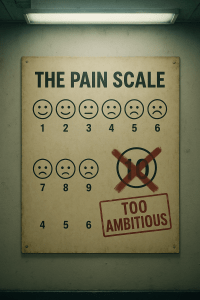 The Cumberland Pain Clinic in Nova Scotia will remain open, continuing its tradition of inefficiency and long wait times. Patients will face three-year delays for care, with limited treatment options and no use of comprehensive assessment tools. The government promotes self-management while protecting the budget by minimizing patient expectations and outcomes.
 - Pause for Serious ReflectionNSBANS paused satire to condemn the September 10, 2025 murder of conservative commentator Charlie Kirk. While MLA Elizabeth Smith-McCrossin spoke out, Nova Scotia’s PCs, NDP, and Liberals remained silent. NSBANS extends condolences to Kirk’s wife and daughters, urging politicians to confront political violence instead of pretending it doesn’t exist.
- Solar Panel Restrictions
 The Province of Nova Scotia has implemented immediate restrictions on solar panel installations, limiting households to three panels to prevent potential destabilization of the sun’s outer atmosphere and subsequent solar flares. Violations may incur fines and mandatory educational programs, emphasizing the balance between renewable energy and cosmic safety.
 - Pirate Regulations
 The Nova Scotia Bureau of Responsible Piracy (NSBRP) has been established to regulate pirate-related activities. New laws prohibit pirate costumes without ships, limit public shanty singing, and require parrot licensing. Penalties include fines and unusual consequences. Critics suggest the regulations are insufficient, urging stricter measures to maintain public decorum.
 - Bill Bans Excess Universities
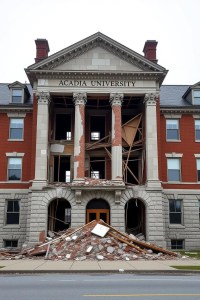 Nova Scotia introduced Bill U-101 to ban the creation of new universities until population growth or rural healthcare improves. The province currently has the highest number of universities per capita in Canada, leading to high tuition and debt. The bill aims to reallocate funds for essential services over redundant education.
 - LEAKED GOVERNMENT STRATEGY MEMO
 The Nova Scotia Department of Perpetual Liberalism asserts that voters will always receive a Liberal government, regardless of party labels. It outlines strategies that ensure continuous Liberal dominance through tactics like transferring politicians to other parties, manipulating budgets, and creating job security for activists, emphasizing a façade of fiscal responsibility.
 - DalU Managed Collapse
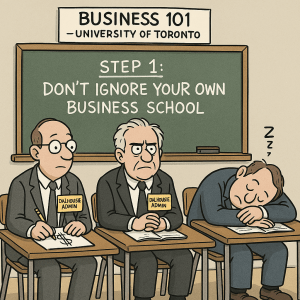 The Government of Nova Scotia has announced that Dalhousie University has entered a managed collapse due to a $20.6 million deficit, faculty lockout, and ongoing tuition issues. Funding is suspended until leadership undergoes mandatory financial education. The crisis has led to significant student disruptions, including class cancellations and a focus on absurd academic offerings.
 - Secret Beer Tax
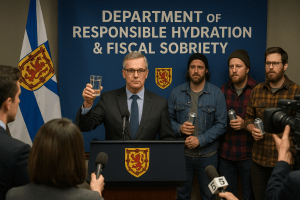 Nova Scotia’s government has confirmed that Halifax Water’s forthcoming rate increases of 16.2% and 17.6% are essentially a covert Beer Tax aimed at phasing out microbreweries to promote responsible hydration. Critics argue this jeopardizes public health, while the government defends it as necessary for climate change adaptation funding.
 - Province Bans Rural Road Repairs, Declares Potholes “Climate Adaptation Infrastructure”
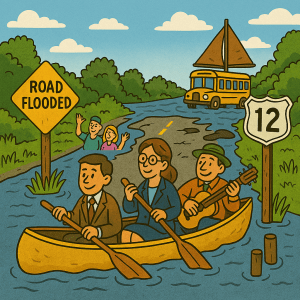 The Nova Scotia government has reallocated road maintenance funding exclusively to 100-series highways, allowing rural roads to “rewild.” Potholes and washouts are now seen as climate adaptation features. Unauthorized repairs will incur fines, promoting a shift towards localism and environmental resilience. By 2030, many rural roads may become hiking trails.
 - Province Bans Lazy “Pictou County” Claiming — Demands Geographic Accuracy
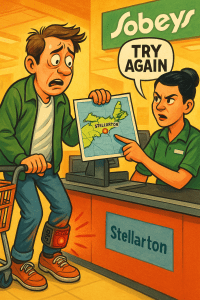 The Government of Nova Scotia has enacted rules to combat the misuse of the term “Pictou County” by residents of its municipalities. Individuals must accurately identify their town unless traveling far away. Fines and potential GPS tracking will enforce compliance, aiming to enhance geographic honesty and reduce misrepresentation among locals and tourists.
 - 🚍 Nova Scotia Declares War on Solo Transit
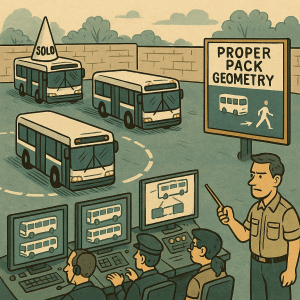 Nova Scotia has launched a “Bus Gang Initiative,” mandating all Halifax Transit buses to operate in groups of three or more to eliminate solo transit. This controversial policy aims to enhance street chaos and confusion, as regulations enforce coordination and monitor passenger behavior, creating a theatrical and unpredictable transit experience.
 - Nova Scotia Bans Flashing Headlights to Nudge Distracted Drivers
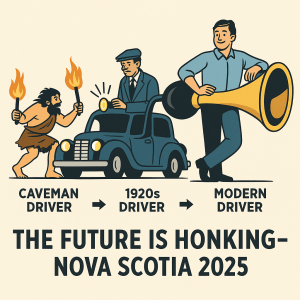 Nova Scotia has implemented a ban on flashing headlights at intersections, promoting the exclusive use of car horns to signal distracted drivers. The “Honk for Progress Act” aims to enhance traffic flow and reduce confusion among drivers. A $227 fine and mandatory training awaits violators. The initiative seeks better communication on the road.
 - Nova Scotia Deploys “Moisture Bubbles” and Emotional Support Sprinklers to Tame Wildfires: Firefighters Now Trained in Humidity Whispering
 Nova Scotia has introduced the innovative “Moisture Bubble Initiative” to combat wildfires by creating humidity halos around homes. This strategy involves spraying lake water into the air and training firefighters in emotional tactics. Residents are encouraged to maintain a positive mindset, while violators face workshops promoting hydration and meditation.
 - OFFICIAL NOTICE: Misconduct Penalty Issued to Premier Houston by the Nova Scotia Hockey & Energy Board
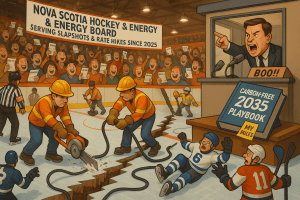 Nova Scotia Hockey & Energy Board 📢 OFFICIAL NOTICEFor Immediate Release: September 3, 2025. NOTICE OF INFRACTION OFFICIAL NOTICE: Misconduct Penalty Issued to Premier Houston by the Nova Scotia Hockey & Energy Board Screaming About His Own Rulebook 🛡️Background The… Read more: OFFICIAL NOTICE: Misconduct Penalty Issued to Premier Houston by the Nova Scotia Hockey & Energy Board
 - Province Introduces Glyphosate Disclosure Ban to Streamline Public Expectations
 The Province of Nova Scotia has implemented a Glyphosate Disclosure Ban, preventing citizens from inquiring about glyphosate spraying locations. This policy aims to alleviate public anxiety and improve communication efficiency. Officials argue it supports wildfire management and healthcare planning by linking herbicide use to cancer rate increases and hospital expansions, with fines for inquiries.
 - Nova Scotia Bans Kitchen Parties
 Nova Scotia has introduced a province-wide ban on kitchen parties effective August 31, 2025, under the “Silence in the Stove Room Act.” The ban aims to curb noise and structural damage, requiring gatherings to relocate to designated venues. Enforcement includes fines and attendance at Quiet Time Workshops for repeat offenders.
 - Province Bans Criticism of Climate Policy, Introduces Mandatory Optimism Training
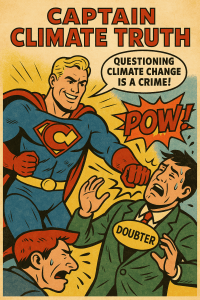 The Province of Nova Scotia has banned criticism of its climate policies under the new Climate Confidence and Compliance Initiative. Citizens and media must express only optimistic views about climate action, with fines imposed for violations. The initiative aims to create a positive atmosphere around climate discussions, prioritizing a legally mandated optimistic attitude.
 - Province Approves Gold Mine, but Still Plays the Broke Girlfriend
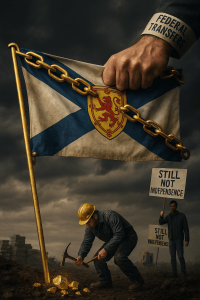 Nova Scotia has approved its first gold mine in 197 years, aiming to bolster its economy amid reliance on significant federal transfers. The mine is projected to generate $528 million in tax revenue, yet critics highlight the province’s ongoing financial struggles, emphasizing that this move does not equate to true economic independence.
 - Nova Scotia Bans Gas Leaks
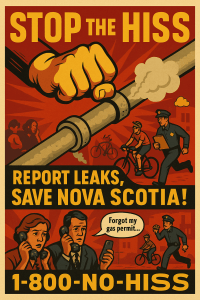 Nova Scotia has enacted a ban on gas leaks, spanning all sources, to enhance public health and infrastructure. The Stop the Hiss Initiative introduces a leak hotline, fines for cyclists lacking permits, and measures for livestock emissions. Violators face fines, community service, and mandatory awareness sessions, with potential financial backing from various new revenue streams.
 - Province Rejects Halifax Regional Plan: Plan Too Woke, Province Too Broke
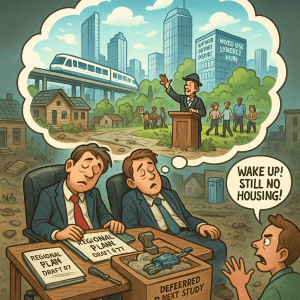 The Nova Scotia government has rejected Halifax’s latest Regional Plan, labeling it overly ambitious and too reliant on buzzwords. Concerns include inadequate basic infrastructure and zero homes built despite extensive consultations. The province criticized both local and provincial planning efforts as ineffective, emphasizing a lack of real progress in addressing housing issues.
 - Province Commits to Perpetual Rail Studies to Preserve Tradition
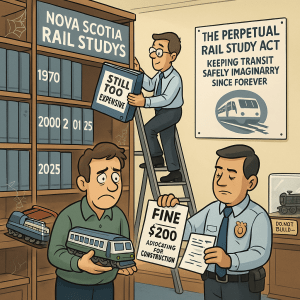 Nova Scotia has formalized its tradition of conducting rail studies every 10–20 years, consistently concluding that rail transit is too costly. The Perpetual Rail Study Act ensures ongoing studies, with findings indicating impracticality. Alternatives, like “bike trains,” are proposed, while citizens advocating for rail construction face fines. The commitment reflects a long-standing avoidance of building transit infrastructure.
 - Beaches Closed to Reduce Hurricane Risk
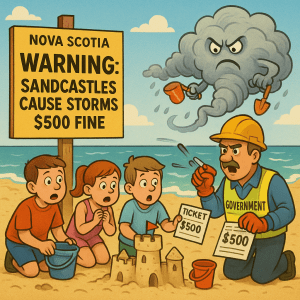 Nova Scotia has enacted immediate beach access restrictions to mitigate hurricane risks, citing human activity as a potential trigger for storms. Prohibitions include walking, swimming, and building sandcastles, with violators facing fines. The government urges residents to avoid beaches to aid in hurricane prevention during the upcoming storm season.
 - Summer Construction Suspended to Prevent Heatwaves and Forest Fires
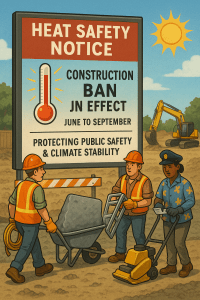 Nova Scotia has implemented a summer construction ban from June to September to mitigate heatwaves and wildfires, as part of the Climate Stability and Infrastructure Harmony Strategy. The ban prohibits activities like asphalt paving and concrete pouring in high temperatures and incurs fines for violations. This aims to protect the environment and public safety.
 - Province Bans Homelessness Solutions, Commits to Strategic Blame
 The Province of Nova Scotia has banned effective measures to tackle homelessness, opting to rent costly apartments and place blame on various entities instead. Key prohibitions include constructing affordable housing and acknowledging systemic issues. The apparent policy promotes inaction while deflecting accountability, leading to a significant rise in homelessness in Halifax.
 - Nova Scotia Declares Official Ban on Seagull Screaming After 9 p.m
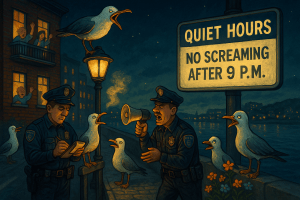 Nova Scotia has enacted a ban on seagull screaming after 9 p.m. to promote peaceful nights. The Department of Unnecessary Regulations outlines quiet hours, a relocation task force for repeat offenders, and fines for violators. The initiative aims to balance environmental concerns with public tranquility amid numerous gull-related complaints.
 - Cycling and Bike Lanes Banned to Meet Climate Targets
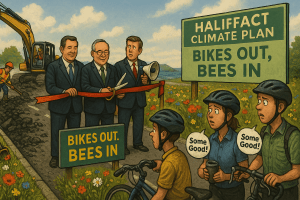 The Province of Nova Scotia has announced a ban on cycling and bike lanes as part of its HalifACT climate plan to meet new greenhouse gas reduction targets. This decision stems from research indicating cycling emits significant carbon dioxide. Existing bike lanes will be converted into wildflower corridors to enhance biodiversity.
 - Nova Scotia Bans the Phrase “Not Toooo Baaad” Province Orders Residents to Use the “Some Good” Scale Instead
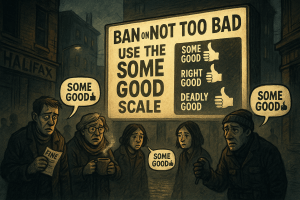 Nova Scotia has banned the phrase “not toooo baaaad,” calling it a linguistic menace. Residents must now use the “Some Good” Scale to express enthusiasm, with terms ranging from “some good” to “deadly good.” Violators face fines and may attend Exclamation Boot Camp to improve their expressions of joy.
 - Hot Drink Restrictions to Reduce Fog
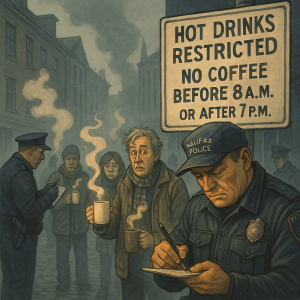 The Province of Nova Scotia has implemented hot drink restrictions to address excessive fog, banning coffee, tea, and hot chocolate consumption before 8 a.m. and after 7 p.m. Officials link the steam from these beverages to fog density, affecting visibility and safety. Violators may face fines and enforcement measures.
 - Province Removes Restrictions on Offshore Wind, Introduces Plaid Standard
 The Province of Nova Scotia has lifted restrictions on offshore wind development, allowing large-scale turbine construction. New guidelines mandate that turbines must be painted plaid to honor cultural heritage and minimize bird confusion. This initiative aligns with the province’s net-zero goals and aims to blend renewable energy with local tradition.
 - Province Restricts Nova Scotia Guard to Prevent “Unregulated Goodwill”
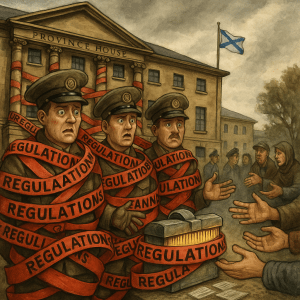 News ReleaseDate: March 28, 2025 Province Restricts Nova Scotia Guard to Prevent “Unregulated Goodwill” Halifax, Nova Scotia — The Province of Nova Scotia has announced new restrictions on the Nova Scotia Guard, a volunteer emergency response force, to address concerns… Read more: Province Restricts Nova Scotia Guard to Prevent “Unregulated Goodwill”
 - Province Bans Uranium Ban to Unlock Economic Glow
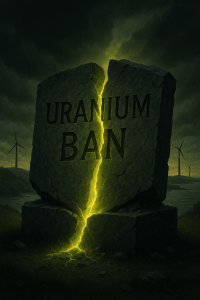 Nova Scotia has lifted its long-standing uranium mining ban, aiming to enhance economic growth by utilizing its natural resources. This decision counters previous restrictive policies shaped by local opposition. Officials emphasize responsible mining and have introduced fines for violations, marking a shift toward economic development while managing community concerns about safety and environmental impact.
 - Province Bans Transparency, Outlaws FOIPOP Requests to Streamline Communication
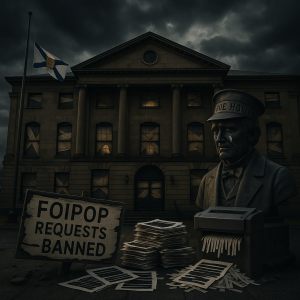 Nova Scotia has abolished Freedom of Information and Protection of Privacy (FOIPOP) requests, introducing a new framework aimed at streamlining communication. This change, part of the Transparency Reduction and Administrative Efficiency Strategy, is designed to save time and reduce legal liabilities while enhancing government opacity. Violations may incur fines, with several restrictions in place.
 - Province Bans Auditor General Independence (Again), Then Pretends It Never Happened
 The Province of Nova Scotia briefly attempted to limit the independence of the Auditor General by introducing Bill 1, which allowed for their dismissal without cause. Following public backlash, Premier Houston withdrew the amendments, claiming a misunderstanding, while making clear such limitations could be reintroduced in the future.
 - Premier to Double Population
 Premier Tim Houston of Nova Scotia aims to double the province’s population to 2 million by 2060, proposing solutions like desalination and sewage systems. However, rapid growth strains housing and healthcare infrastructures. Despite record immigration, concerns about sustainability and resource management persist, leading to criticism and drastic enforcement measures against dissent.
• • •

 Nova Scotia Bureau of Absurd Nova Scotia